1
The raw
Out of the workroom the hide is even and quiet. The grain reads clean because it has not yet been asked to flex at your elbows, shoulders, and commute.


Care
The belief
Full-grain leather is a living material. It breathes, softens, and records every season you move through. The goal of care is not to keep a jacket looking new it is to keep the fibre structure supple so the patina deepens evenly over years, not months.
Generic conditioners and petroleum-heavy products were formulated for corrected-grain and bonded leathers that never had longevity as a brief. On full-grain hide, they can seal the surface, trap moisture, or accelerate uneven darkening in high-wear zones.
Consistent, minimal intervention beats occasional heavy treatment. A light rhythm of cleaning and feeding aligned to how often you wear the piece is what lets an LHEATHER jacket stay honest to its tannage and construction for decades.
Conditioning
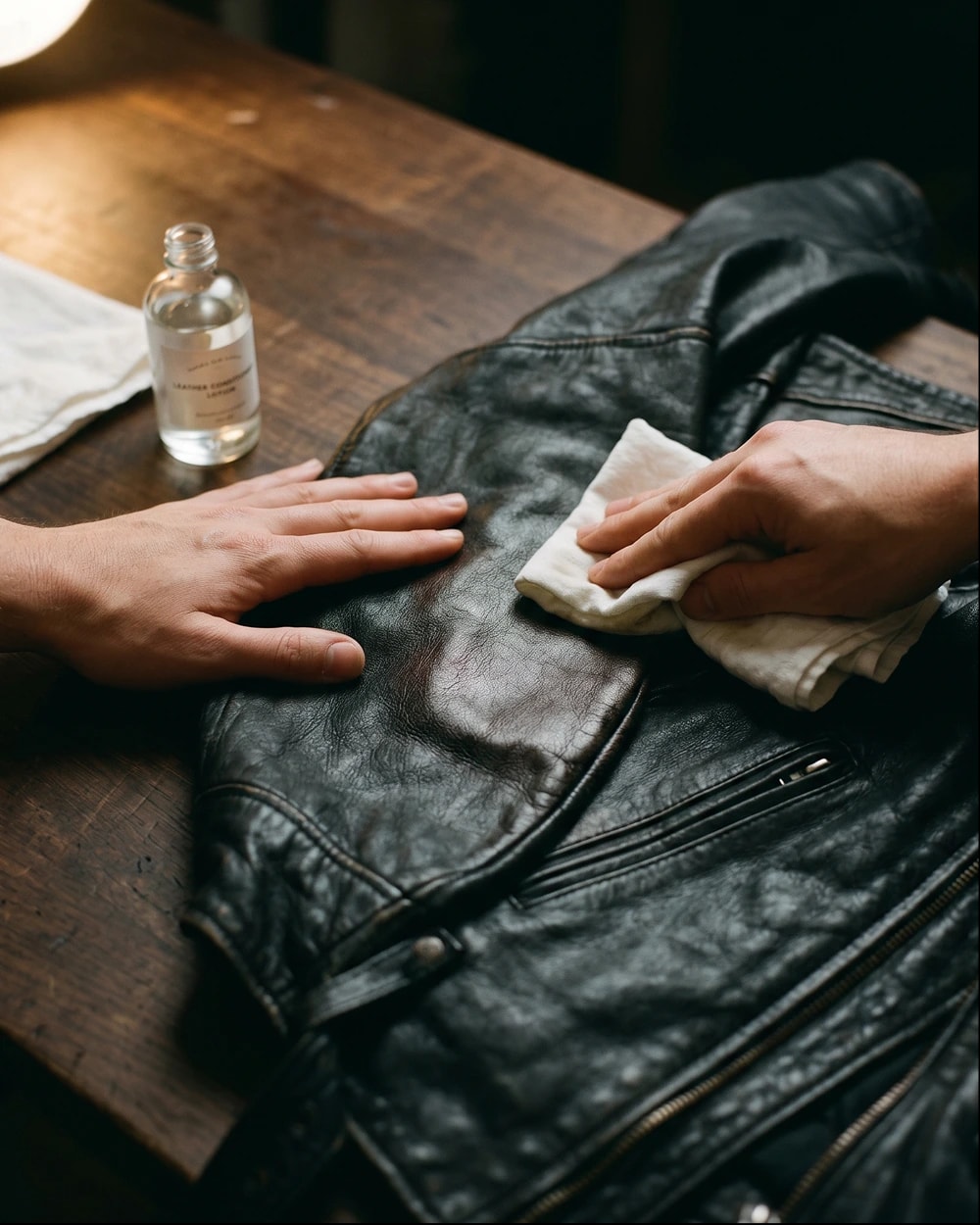
Wipe the jacket down with a soft dry cloth before conditioning. Remove surface dust and any dried moisture. Do not use water to clean before conditioning.
Use our LHEATHER conditioner designed for full-grain hide. Do not use petroleum-based products, baby oil or anything containing silicone.
Apply a small amount to a soft lint-free cloth. Work in circular motions across the leather. Less is more you are feeding the hide, not coating it. Allow each section to absorb before moving to the next.
Keep conditioner on the outer leather only. Do not apply near the lining, interior pockets or any fabric panels.
Hang the jacket on a padded hanger and allow it to absorb for at least four hours before wearing. Overnight is better.
Once absorbed, buff gently with a clean dry cloth to remove any surface residue. The leather should feel supple, not greasy.
Storage
How you hang a jacket shapes how the shoulders sit for years. A wide, padded hanger preserves the roll of the collar and prevents dimpling at the sleeve heads. Wire and thin hangers transfer stress to seams that were never meant to carry the full weight of full-grain leather.
When it is not on your body, air circulation matters as much as support. A breathable cotton dust bag shields against dust and light abrasion while allowing moisture to escape. Plastic traps humidity against the hide and can encourage uneven marks over time.
Store the piece out of direct sunlight UV will shift tannage and patina faster in folded or compressed areas than across the whole surface. A dark, interior closet or wardrobe is enough; attics and closed trunk storage are usually the wrong climate.
Before long storage, give the leather a light wipe and, if it has been a dry season, a thin pass of conditioner. You are not dressing it up you are leaving the fibre in equilibrium so it greets the next wear without stress.
.png&w=3840&q=90)
Water & weather
LHEATHER hides are finished to shed light rain. Water should bead on the surface rather than soak in immediately. A short walk in drizzle is not a crisis it is part of how leather learns your climate.
If the jacket gets wet, let it dry naturally at room temperature on a padded hanger. Do not use radiators, hair dryers, or direct sun to rush the process; heat can shrink panels and stiffen tannage unevenly.
Once completely dry, condition lightly. Rain strips a fraction of the hide's surface oils; replacing them in a controlled way keeps the break areas supple and prevents the leather from feeling chalky after repeated wetting.
Never fold or stack a damp jacket. Weight on wet creases can set permanent lines. Hang until the lining and leather both read dry to the touch, then air the piece for another day if storage humidity runs high.
Leather patina
Patina is not damage. It is the record of motion, light, and oil moving through full-grain fibre over time. The best jackets do not freeze at showroom sheen they open.
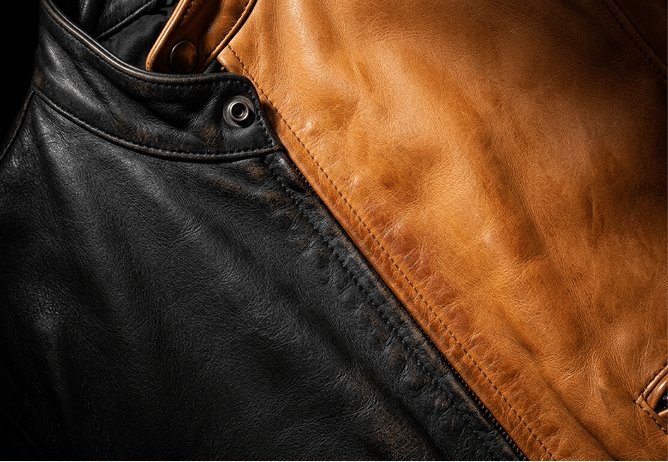
Out of the workroom the hide is even and quiet. The grain reads clean because it has not yet been asked to flex at your elbows, shoulders, and commute.
Creases form where you move. Those lines are the leather learning your cadence. With conditioning and rest, they soften instead of sharpening into stress.
Light, rain edges, and the oils from your hands deepen tone unevenly on purpose. That variation is character, not a flaw to erase.
We build for a second owner who will inherit your patina story. The jacket is finished so age reads as authority, not exhaustion.
Dry cleaning: Solvents and drum action strip tannage and can delaminate panels.
Machine washing: Submersion and agitation destroy fibre structure and seam integrity.
Direct heat: Radiators, blow dryers, and sun through a car window shrink and stiffen hide unevenly.
Petroleum-based products: They seal the surface and trap moisture instead of feeding the fibre.
Silicone sprays: They add a plastic slip that prevents conditioners from reaching the grain.
Wire hangers: They concentrate weight on narrow stress lines at the shoulder.
Solvents / detergents: Household cleaners and alcohol lift finish and oils you cannot replace at home.
If a seam loosens, a panel scuffs deeper than surface patina, or hardware needs attention, we want to hear from you before a small issue becomes a structural one.
Our atelier maintains the same thread, reinforcement, and leather standards as original build. Repairs are quoted honestly we do not upsell work the jacket does not need.
Reach through the contact page with photos and how long you have worn the piece. We will respond with next steps, lead time, and whether the work is best handled in Kanpur or through a trusted partner closer to you.
“A jacket built to last decades should be supported for decades. That is the only position we know how to hold.”